Sunday, July 7, 2013

Aren't You Glad You Used Dial?

Home gaming has been around about as long as I have, and the industry has made astonishing progress in the forty years since the first Pong machines were parked in front of the family television set. Unfortunately, in our race to advance the hobby, we tend to leave its earlier innovations in the dust. 

It's alive! ALIVE!
Take the dial controller, for instance. What used to be standard equipment for game consoles has become a little-seen novelty, compatible with just a few games and often carrying a hefty price tag. (Seriously, look up a JogCon or a Vaus controller on eBay sometime. You'll plotz.)

There are no mass-produced dials at all for home computers, which is especially frustrating when you consider the many emulators that support them. Sure, you could use a mouse or an analog joystick instead, but the only way to get the precision and the feel of a dial is to build one yourself. Fortunately, it’s possible to build one from spare parts… a laser mouse here, a few buttons there, the knob from an Atari paddle on the top, and a box to hold it all, and you’re off to the races.

I won’t bore you with the specifics of how my dial came to be… I’ll save that for an Instructables entry. However, I will bore you with reviews of the games I’ve recently played with it!

ARKANOID

If you were reading Telebunny, you’d get a painstakingly detailed analysis of Arkanoid, exploring its evolution of the Breakout gameplay and its impact on video game history, while unearthing a treasure trove of intriguing facts about its development. However, since Parish doesn’t have a dial, you’ll have to settle for sloppy seconds. Bwa ha ha!

The solid NES conversion of Arkanoid.
Instead, I’ll tackle the game from a more personal perspective. Arkanoid was released in 1986, when Japanese companies were working to not only revive the struggling arcade scene, but reinvent it. Most of these developers distanced themselves from an Atari-dominated past, but Taito built on that foundation with games like Bubble Bobble and Arkanoid, infusing familiar play styles with the innovations of the late 1980s.

I loved both the Atari and NES eras of gaming, so you can imagine how thrilled I was with a game that brought them together. I played Arkanoid every chance I got, and snapped up a copy of the NES version shortly after I bought the system in 1988. Twenty five years later, the game’s inspired countless spin-offs and knock-offs, all with something new to add to the formula. However, Arkanoid brings just enough to Breakout to give the game depth and purpose, without feeling overburdened by the new features. The power-ups are logical, the stages thoughtfully designed, the gameplay kept streamlined and straightforward. All the pieces just fit, which can't always be said for the games that followed in its footsteps.

ARKANOID: DOH IT AGAIN

If only the game were this appealing!
I always wanted to get my hands on this game, released as a budget title late in the life of the Super NES. Now that I’ve actually played it, I’m not sure it deserved all that excitement. To its credit, the game’s got the lush graphics you’ve come to expect from the Super Nintendo, including some striking science-fiction scenes, and there’s plenty of Mode 7 razzle-dazzle in the boss stages. One fight with DOH has your stone-faced nemesis grabbing the edges of the screen and turning it upsidedown. It doesn’t serve much purpose beyond disorienting you, but hey, it is a Super NES game!

That’s just the window dressing, though. Look beyond it and you’ll find a banal experience, easily in the low tier of Arkanoid games. In contrast with the other games in the series, DOH It Again is almost insultingly easy, taking at least ten stages before it starts to pick up steam. The sound is also a miss, with the classic ringing of broken bricks taking on a staccato, unpleasantly digital edge that would probably be more at home on the creaky Odyssey2. (The music is strictly reserved for the boss fights, and it has that overwhelming pipe organ motif that's aggravatingly common in Super NES titles.) The gameplay is classic Arkanoid, give or take a few aggravating new enemies, and the game plays like a dream with a dial, but this is still not one of the series’ finer moments.

BALLARENA

As seen on "I Love the '90s."
I’d written about this mysterious game before, after digging up a preview from an old issue of Video Games and Computer Entertainment. I thought it had been lost forever, but a French reader was kind enough to inform me that the game really did exist for the Acorn Archimedes computer, and helped me through the tricky process of installing it on my system. He’s got my thanks for satisfying my curiosity about this long-lost release after twenty long years of wondering.

With all that said, Ballarena is pretty lousy. As the pictures in VG&CE suggested, it’s a hybrid of Arkanoid and Gyruss, but these two great games make one hell of an ugly baby. You circle around the edge of the playfield like in Gyruss, but unlike Gyruss, there’s no vanishing point in the center… the ball just flies past it to the opposite end of the screen, often slipping past you in the process. Miss a ball and you’re dragged to the side of the screen for another, as the computer cries “MAMA MIA!” in a voice so grating, it would give even Charles Martinet a splitting headache. The graphics demonstrate the power of Acorn’s state-of-the-art ARM processor, with some striking patterns in the later stages, but you’ll have a hell of a time reaching them thanks to the ill-conceived gameplay. By the way, who was the dope who thought it would be a good idea to stop the action with a text message every time a power-up appears? I hope he trips down some stairs. Like those really long cement ones Sly Stallone jogs up in the Rocky movies.

BLOCK BLOCK

I'm going to need a Tylenol
after this one.
The name’s not doing it any favors, but Block Block is nevertheless a fantastic title, challenging even the mighty Arkanoid as the king of the block buster genre. Designed by Capcom and Mitchell, Block Block’s got the same vibrant color and whimsical touches that defined their last tag-team effort, Buster Bros. However, what really makes this game stand out are the ways it distances itself from- and improves upon- Arkanoid.

For instance, take the way Block Block handles the length of your paddle. It starts out fairly long, but there’s a counter at the bottom of the screen that drops each time the paddle strikes the ball. When the counter hits zero, the paddle drops a few pounds, making it tougher to keep the ball in play. Fruit can fatten up the paddle, but it’s only a temporary fix, giving the player an incentive to carefully aim their shots and finish each stage in short order. However, if you find yourself stuck, sometimes the game will take pity on you and drop an exit sign somewhere on the playfield, giving you a chance to skip the stage entirely. Any Breakout fan who's spent minutes trying to clear away the last elusive block in a stage can tell you what a relief it is to have this backdoor available to them.

Some of Block Block’s innovations are less welcome than others. A few stages put blocks below your paddle, forcing you to take an uncomfortable leap of faith and let the ball slip past to clear them. Other stages have bumpers and other pinball targets, suggesting that the designers forgot how well they didn’t work in Namco’s Cutie Q and Gee Bee. There are occasional stumbles here and there, but what works in Block Block overshadows what doesn’t.

CAMELTRY

Going for a spin in Cameltry.
Camel-Try? Camel-Tree? However you pronounce it, Taito’s spinning labyrinth game is a keeper. Best described as a smoother, more exciting version of the bonus stages in the original Sonic the Hedgehog, Cameltry challenges you to guide a marble through a maze by turning the world around it. Holding down the fire button gives your marble added weight, letting it smash through barriers, but it also increases the risk that you’ll touch the penalty squares that leech away what little time you have to reach the goal. Finish a stage and you’ll be rewarded with another, more difficult one. Run out of time and you’ll be picking up what’s left of your marble with a dustbuster.

Cameltry made its debut in arcades, but there’s also an excellent Super NES conversion called On the Ball which makes the most of that system’s hardware scaling and rotation. They both play beautifully with a homemade spinner, and both come highly recommended even if you don't have a dial handy.

OMEGA RACE

It's just you and me now, triangular paddleboat!
This was always a childhood favorite on the VIC-20, and I’m still amazed at how well the (shoestring) budget computer was able to reproduce the game’s vector graphics. Nevertheless, the visuals are a lot sharper in the arcade version of Omega Race… to say nothing of its teeth! While the fearsome death ship mindlessly bounced around the playfield in the VIC-20 version of the game, it purposefully zeroes in on you here, spraying laser beams when you fall into its line of sight.

Beyond that, the experience is largely the same, with the player darting around a rectangular track, picking off innocuous drones before they can morph into more threatening forms. Omega Race demands a more proactive approach to hunting your targets than Asteroids, along with mastery of your ship’s sensitive thrusting. If you’re not moving, you won’t be living for long.

STAR TREK: STRATEGIC OPERATIONS SIMULATOR

It's smooth sailin' until every Klingon in the
quadrant closes in on you.
Back in the 1990s, a friend observed that Star Trek just doesn’t translate well to video games, because the series was more about exploration and interaction with diverse alien cultures than indiscriminate blasting. That’s clearly no longer the case, if the vast worlds and deep characterization of Mass Effect are any indication, but it must have been one hell of a challenge to squeeze the Enterprise into the cramped confines of an arcade cabinet back in 1982.

Sega’s solution was to present its game as a battle simulation. They stripped away the technobabble, the moral dilemmas, and the absurd plot twists, and presented the player with three simple goals: blast Klingons, defend space stations, and stay alive. Normally, they could achieve this with impulse power and phaser fire, but in times of distress, players could fire a photon torpedo, wiping out any Klingon caught in the explosion, or hit the warp button for a fast escape.

As dumbed down as it was from the television show, Star Trek was pretty sophisticated for a 1982 arcade game, with shields acting as a health bar years before they were commonplace and windows that showed the action from multiple perspectives. It doesn’t offer the visceral, seat of the pants action of its rival Star Wars, but Star Trek is a fun game in its own right, with a slower, more measured pace better suited to fans of the franchise.

TYPHOON 2001

Sensory overload makes a comeback in Typhoon 2001.
(Image courtesy of Arcade-Junkies.com)
Oh baby, now that’s the stuff! There’s no question… this little gem by German programmer Thorsten Kuphaldt is the king of Tempest clones. It’s closely patterned after Jeff Minter’s official remake for the Atari Jaguar, but surpasses it with the sharp high-resolution graphics only possible on a modern home computer. Best of all, it’s compatible with just about anything you can throw at it… I must have spent hours playing this on my netbook when I was going to college. But only between classes, of course! (Heh heh.)

Typhoon 2001 readily accepts mouse input, making it compatible with any spinners you happen to have on hand. It’s better if your spinner has a flywheel, but you can get by with an ordinary dial if you crank up the mouse sensitivity to adjust for the lack of inertia. You might also want to crank down the distracting Minter-brand special effects if you want to make it past the fifth stage.

VICTORY

Victory. Where figuring out what the hell
to do is half the challenge!
“Baffling” doesn’t even begin to describe this one. You’re the pilot of the Battlestar, a well-armed disco ball, and it’s your mission to keep a gang of cosmic criminals in prison. Unfortunately, you’ll be quickly swarmed by their buddies the moment the game begins. Hovercrafts streak across the sky, dropping paratroopers which free the Quarks, and clusters of ground-to-air missiles launch as you approach. If it gets too hot on the planet’s surface, you can escape to deep space for temporary relief, but the longer you’re up there, the more time the aliens have to spring the Quarks from their cells!

Like its inspiration Defender, Victory is frantic and chaotic… but it’s also incredibly confusing, something no shooter from the early 1980s should ever be. There are so many buttons and status bars and details that it’s hard to keep track of it all, and the aliens rarely give you the opportunity to sort it all out before blowing you to bits. On the plus side, your Battlesphere- er, star- controls pretty well with a dial, and there’s plenty of synthesized voice, which must have been mindblowing at the time and remains impressive thirty years later.

VS BLOCK BREAKER

Getting the boot in Vs Block Breaker.
The game emphatically states that it’s intended only for Asian audiences, and it’s easy to see why after you’ve spent a few minutes with it. With its surreal situations and a cast of bizarre, brightly colored characters spouting random phrases in Engrish, Vs Block Breaker is about as American-proof as a game can get. Some players eat up this style of game design and others couldn’t find the charm in it with an electron microscope, but they’ll both have to agree that Vs Block Breaker brings something new to the often redundant block busting genre of games.

The twist here is that each stage is a tug of war against a character on the right hand side of the screen. As time passes, your opponent squeezes your side of the playfield, giving you less room to move and shrinking your blocks. You can give yourself some temporary breathing room by hitting a power-up that sometimes drifts across the playfield, but your only hope for long-term survival is to clear away all the blocks, giving your hero the strength to squash his rival flat. It’s a clever idea that really shines in the versus mode, where two players gain and lose ground as bricks are shattered.

WOODY POP

Come on Sega, I thought we were friends!
You gotta love ‘em, but you’ve nevertheless gotta admit that Sega made a career out of lifting ideas from other companies, particularly in the 1980s, before the creation of Sonic the Hedgehog. When Nintendo gave the world Donkey Kong, Sega quickly responded with Congo Bongo. When Nintendo introduced Mario as the spokesman for its first game system, Sega gave us its own mascot, the perennially hapless Alex Kidd. And so it goes with the rather unfortunately named Woody Pop, a knock-off of Taito’s Arkanoid series.

There are differences between the two games, but they’re mostly cosmetic. While Arkanoid is set in the far reaches of ‘80s art deco space, Woody Pop takes place in a rustic 19th century mansion. While Arkanoid littered its stages with a never ending supply of spheres, cubes, and spinning cones, Woody Pop instead offers wind-up toys, belched out from question blocks strategically placed in most stages. Finally, while Arkanoid had the sleek Vaus as its lead character, Woody Pop gives you a shifty-eyed, rose-cheeked block of oak. Sega was probably aiming for adorable here, but there’s something about Woody that makes me want to run out of the room screaming.

There’s one other thing worth mentioning. Woody Pop was originally released for the Sega Master System, but it never left Japan because of its reliance on a special dial controller released only in that country. However, the game eventually did make it to the United States as an early release for the Game Gear… a handheld with no analog controls whatsoever. Uh, perhaps you should have thought that one through a bit more carefully, Sega.

Friday, June 21, 2013

The Xbox One Post-Mortem

The Xbox One as it was originally envisioned by Microsoft is no more; the victim of public outcry and the most hopelessly uphill PR battle since the debut of New Coke. Now there will be no required internet access, no daily checks to verify your rights to games, and no hassles when lending, trading, or selling software to your friends. 

All of these restrictions may be gone, but the discontent with Microsoft remains. Some gamers have been pacified by the company's decision to scuttle the Xbox One's unsavory DRM, but others are reluctant to get onboard, wary of what Microsoft once had planned for them and uncomfortable with the Kinect camera. That's still a mandatory part of the Xbox One hardware, it's still always listening for user input, and it still presents ugly possibilities for user surveillance and targeted advertising.

Microsoft is also taking heat from the minority of gamers who were happy with the machine's original design (yes, there really are some out there!), along with developers who hoped to stem the tide of used game sales. A recent article published on Gizmodo argues that Microsoft's retreat from DRM hobbles innovation and anchors the game industry to the past. However, author Kyle Wagner hangs his hat on hypotheticals... games could have been cheaper without a used market. The family sharing plan could have given up to ten people access to your games. The Xbox Live store could have emulated Steam's frequent sales and heavy discounts.

Jim Sterling, a writer for Destructoid and one of the Xbox One's most vocal critics, was not swayed by Wagner's optimistic what-if scenarios. In his response, Sterling muses: 

"It takes a lot of naivety to trust so willingly in Microsoft, a company that's done absolutely nothing to earn our trust. It takes even more to believe that an industry so dependent on heavy-handed consumer control deserves to survive. Frankly, any industry that suffers due to the reversal of ONE console's DRM policies is an industry that deserves to suffer."

Sterling has taken this hardline stance about the game industry's financial recklessness in previous Destructoid articles, and while they may sound callous, those harsh words are not without wisdom. Game development has gotten so expensive that absurd sales margins are necessary to break even on top-shelf titles. Street Fighter X Tekken is an excellent example... this crossover between two of gaming's biggest fighting franchises sold 1.4 million units, yet was still regarded as a disappointment by Capcom's sales department.

The Xbox One's internet requirement and restrictions on used games were designed to give publishers a path to meet their unrealistic sales goals. With those restrictions gone, it may be time for them to consider the reality that the game industry just can't shoulder the burden of scores of AAA titles every year. Gears of War producer Cliff Bleszinski was wrong to target used game sales for the woes of game publishers, but he's got at least one thing right... with the average game budget eclipsing any hope of a return on that massive investment, the numbers just don't work.

Returning to the topic at hand, what does Microsoft's recent policy reversal mean for the future of the Xbox One? The decision to drop DRM ensures that the Xbox One will have a future, even if it enters the console race with a few bruises and a limp. I was certain the system's internet restrictions and narrow user base would doom it to a long, dusty life on store shelves. Without those limitations, the Xbox One has an honest shot at success... but with a one hundred dollar price difference and the unnerving presence of the Kinect camera, it may have to settle for nipping at Sony's heels throughout this console cycle.

Sunday, June 16, 2013

Hola, all!

Just to let you know, I'm not dead... although a recent attempt to build a spinner for my PC did take a bite out of my thumb. I've been wanting to write a follow-up on that Ballarena article I wrote a year ago, but need the proper equipment for it. Trust me, playing an Arkanoid clone without a dial is not something you want to do.

(Neither is slicing your thumb open with an Xacto knife, but I digress.)

Anyway, I'll be back again, and hopefully soon. Thanks for your patience.

Sunday, May 26, 2013

Xbox One: What You Leave Behind


One big headache.
Source: thetechblock.com

“So,” the three people who are reading this are saying, “do you have an opinion about the Xbox One?”

Oh lord, do I have an opinion about the Xbox One. Where do I start?

For those of you who may have missed it, the Xbox One was finally revealed at a press event last Tuesday. While the machine outperforms its predecessor from a purely technical standpoint, with double the cores and sixteen times the RAM, in many ways it feels like a huge step back from previous console generations.  Since I’m a glass half empty kind of guy, let’s look at everything you’ll lose when you upgrade to the Xbox One…

BACKWARD COMPATIBILITY

Because the new Xbox is using a completely different architecture, Microsoft has chosen to make a clean break from the previous system rather than attempt hardware emulation as it did in the past. The Xbox One won’t be able to play any of the games from the Xbox 360 library, whether you purchased them on disc or downloaded them from Microsoft’s online store. Logically, this also means that the handful of original Xbox games that could run on the second generation machine won’t on the third.

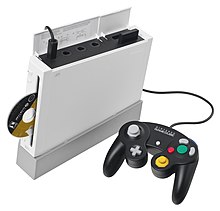
It's hard to tell where the GameCube ends
and the Wii begins!
credit: Wikipedia
Microsoft spokesman Don Mattrick claims that backward compatibility is more trouble than it’s worth, stating “If you’re backwards compatible, you’re really backwards.” What a charmer, that guy! Arrogant dismissal aside, he’s not far off base. Nintendo designed the Wii U with a supercharged version of the same Power PC hardware they used in their past two systems. That makes it a cinch for the system to run Wii games (you know, timeless classics like Ninjabread Man and Red Steel), but has the unfortunate side effect of hobbling its performance as a next generation machine. When the Xbox One and Playstation 4 ultimately hit store shelves, the Wii U will lag as far behind them as the Wii had its own contemporaries.

Backward compatibility is certainly a useful feature, but it’s not worth hobbling a console’s performance for it. With this in mind, I think abandoning it (instead of taking it away halfway through a console’s lifespan, as Nintendo and Sony have done) is probably the right decision. Of course, that will probably mean publishers will offer the games we’ve already purchased in a shiny new package, but should we expect anything less from today’s content providers?

YOUR PRIVACY

Early in the life of the Xbox 360, there was a gadget called the Xbox Live Vision camera, which was designed to bring a level of immersion to the gaming experience. A few dozen games offered limited support for the device, like video chatting in UNO and taunting your opponent with a snapshot in Burnout Paradise, but the webcam didn’t make much of an impression on gamers and was quickly swept under the rug.

The fun never starts.
source: GeltonZ
Years later, Microsoft acknowledged the success Nintendo had with its motion controlled Wii remotes, and tried to one-up them with a device that turns the player’s entire body into a controller. That device, of course, was the Kinect. This combined camera, infrared sensor, and microphone monitor the player’s movements and turns them into input, letting them drive a car by turning an invisible steering wheel or punch out a thug by sending a fist at the television screen. That’s how it works in theory, anyway… in practice, the results have been less than satisfactory.

Microsoft’s been pretty happy with its performance, though. Encouraged by the twenty-four million units it sold for the Xbox 360, the company has decided to pack a next generation version of the Kinect with every Xbox One. That’s pretty cool, right? Now whenever I feel like shakin’ my groove thing in Dance Central, I’ll have the Kinect right there to plug in my Xbox One, whenever I want it!

Oh, but there’s just one problem. You actually can’t use the Xbox One unless the Kinect is plugged into it, and you can’t turn it off, either.  As long as the Xbox One is drawing power, the Kinect is always active, staring at you with its creepy cyclopean eye. The Kinect is designed to let you switch on the system with a simple voice command (which reminds me of a joke I heard about a voodoo dick, but perhaps now’s not the time…), but what’s this thing doing when the Xbox One is lying dormant?

Perhaps what’s more scary is what Microsoft could do with the Kinect when the system is turned on. Microsoft has applied for a patent to make the Kinect scan for warm bodies and stop the playback of films if it finds too many of them in a room. Congratulations Microsoft, you just justified my paranoia!

A WHOLE LOT OF DISPLAY CONNECTIONS

You won't be needing these!
source: Wikipedia
HDMI is great, isn’t it? Just one cable gives you a crisper picture than anything else on the market, and you don’t even need to mess with separate audio cables like you did with component or VGA. It is pretty terrific, but not so great that it should be the only display connection your game system offers. It’s your only option with the Xbox One, so if you’ve got a television set without an HDMI port, you’ll either need to run out and buy one, or just stare longingly at your new system as it rests on the shelf under your entertainment center.

For all its benefits, the HDMI standard also gives you something you won’t want… digital rights management. If you’re hoping to record your first experience with the Xbox One, you’d better have a camcorder handy, because that HDMI connection will probably guarantee that you’re not going to get any footage straight from the system. Fiercely territorial copyright protection is a running theme with the Xbox One, and the more you learn about the system, the worse it gets.

YOUR RIGHTS TO THE GAMES YOU’VE JUST BOUGHT

Okay, here’s a real doozy, and the deal-breaker for a lot of gamers. Spurred on by complaints from developers, Microsoft has introduced a new system to deal with (and monetize) used game sales. The company’s not putting forth too many details for fear of the tar and feathers that will quickly follow.  Here’s what we know about how game purchases and resales will work, from what little Microsoft spokesmen and retailers will tell us:

1. You purchase a new Xbox One game from a store.
2. You insert the game into your system. (okay, so far so good!)
3. The game is written to the Xbox One’s hard drive, and your rights to it are registered online.
4. When you start the game, an online registration check is performed before it will begin. (uh, not so good…)
5. Once you’re finished with the game, you take it to a reseller like GameStop to sell it.
6. The store buys your game and enters a record of that sale in an Xbox One online database.
7. The store splits the profits between Microsoft, the publisher, and itself.
8. You lose your rights to the game and can no longer play it.

There’s exactly one thing I like about this new arrangement, and that’s the ability to play games straight from the hard drive without a disc in the machine. Everything else stinks. With this new system in place, you can’t loan your games to a friend, you can’t sell them on eBay or Craigslist, and you can’t take them to a mom and pop game store where you might get a few more dollars. You may not even be able to rent games, unless Microsoft has made a yet-unannounced deal with GameFly and RedBox.

Given his track record, maybe that
sign should read "wrong way."
source: Joystiq
Market analyst Michael Pachter proclaimed with his usual misplaced sense of confidence that Microsoft “doesn’t have the balls to block used games” a couple of months before the Xbox One unveiling. However, the system the company has planned for second-hand game sales is so tightly restricted and so openly hostile to the end user that it’s only a marginal improvement. Microsoft press flack Larry Hyrb claims that early reports of the Xbox One‘s method of handling used games is “inaccurate and incomplete,” but that’s not a denial, and it’s not a clarification. Most likely, it’s a stall for time until Sony makes a similar admission at this year’s E3.

Yes, I think Sony’s got the same bad news for gamers next month. This is all speculation, but it’s my belief that regulating used game sales wasn’t Microsoft’s idea, or Sony’s, but rather publishers like Electronic Arts and Activision. They’ve complained about the used game market for years, and have at last found a way to take their cut of the profit from software they’ve already sold. It would be easy to lionize Nintendo for not taking part in regulating used game sales, but the reality is that publishers probably didn’t decide how to handle it until after the Wii U was released. Beyond that, third-party game sales are so weak on Nintendo’s systems that there probably wasn’t a point. One can only assume that publishers will just let the Wii U run its brief course and pressure Nintendo to control used game sales with its next system, or drive the company out of the console business completely.

PARTING THOUGHTS

While I have my suspicions, Sony’s plans for the Playstation 4 are still not clear. They could surprise me and turn a blind eye to used game sales, or at least not be quite as ghoulish about them. However, everything I know about the Xbox One has convinced me that there’s no place for it in my collection. For all Microsoft’s crowing about the system’s high performance and useful features, it seems like it was tailor made for the content providers lurking behind the console, rather than the players sitting in front of it.

Monday, May 13, 2013

It's an Odd, Odd, Odd, Odd Mod: Rebuilding the Magnavox Odyssey2


You already know that I'm a fan of video games. What you may not know is that the Odyssey2 was my first home game console. Back in the far-flung year of 1982, most kids were scratching their gaming itch with the Atari 2600, and a lucky few had stepped up to the big leagues of the Intellivision and Atari 5200. However, my brother and I had to get by with the hapless Odyssey2, offered by television manufacturer Magnavox. 


Oh yeah, that thing can go
right back where it came from.
With a paltry 64 bytes of RAM and a sound processor pulled straight from a Kraftwerk song, the Odyssey2 wasn't playing with power even in the tech-challenged early 1980s. Nevertheless, the machine was strangely popular in Michigan (all of my mother's friends seemed to have one), and the software library did have a knack for giving arcade favorites unexpected twists. K.C. Munchkin! changed Pac-Man's dots from stationary treats to more active prey, and Alien Invaders- Plus! turned the innocuous UFO from Space Invaders into a threatening foe bent on your destruction. It wasn't all bad growing up with an Odyssey2... but all the same, I was relieved when the NES arrived a few years later.

Why am I bringing this up? Well, I recently rummaged for some of the old stuff I left in my parents' abandoned barn, and an Odyssey2 turned up. Not the original one; that died in a tree fort a quarter of a century ago. My mom found this one at a garage sale in the 1990s, but it had been buried under a small mountain of clutter. After untangling it from the cords of other abandoned game systems, random gadgets, and even some Christmas lights for fun, I brought it into the house for some... elective surgery.

The first step was to get rid of the RF shielding. Back in the 1980s and 1990s, game systems had metal plating around the internal circuitry to keep their signals isolated. That way, when you're playing Pac-Man, your roommate isn't seeing the ghosts of gaming present on the television in the other room. However, TVs have gotten a lot more sophisticated in the last thirty years, and the RF shield has become little more than a nuisance, keeping prospective hackers like myself from getting at the nutmeats of the console.


We used to connect our video games to a television
with one of these things! Truly, those were dark times.
After diligent de-soldering and a little forceful bending, I was able to throw out that rusty old shell, leading me to my next task... replacing the RF modulator with something more modern. RF is a single wire that sends both audio and video signals to your television, with predictably mediocre results. Later display connections- composite, S-video, component, and the current industry darling HDMI- offer more wires for a crisper, more distinct signal. Luckily, it's not hard to add composite video to the Odyssey2. You just solder audio and video cables, like a pair you might have salvaged from a crappy TV Games unit, to points on the motherboard, stick the grounding wire on ground, and you're done!

Okay, I wasn't quite done. There was one other modification I wanted to make before I could wrap up this operation. Later models of the Odyssey2- like this one- had hardwired controllers, a design flaw in early game consoles I still have trouble wrapping my head around. Not only does this deny you the chance to switch to a controller you prefer, but it means that if one controller is destroyed, the whole console has to be sent in for repairs. Nuts to that! If I was going to play a crappy system like the Odyssey2, I was going to do it with a joystick I liked.


The twin D-shell ports, mounted on the side of the unit.
So I added two 9-pin D-shell connectors. USB they're not, but 9-pin was the most ubiquitous control port in the 1980s, for both game consoles and home computers. The Atari 2600 used it. The ColecoVision used it. Even the 16-bit Sega Genesis, for all its advances, used it. Happily, the joysticks for all these systems and more will work on this modded Odyssey2. I just needed to solder six wires from the motherboard to each of the ports, and find a place on the system's frame to mount them. I wanted to use the back, but the circuit board left no room for that, so I had to settle for carving two rectangular holes into the side of the console. It ain't pretty- I didn't have the right screws for the job and had to make do with what I had lying around- but it gets the job done.

By the end of the weekend, I had myself an Odyssey2 that was even better than the real thing... although that's probably not much of a compliment. Testing the machine with the title Quest for the Rings! (Odyssey2 games had exclamation points at the ends of their titles, in the mistaken belief that the extra enthusiasm would make up for their shortcomings) left me wishing I'd left the blasted thing buried in the barn where I found it. Quest for the Rings! is a pretty cool idea in theory, a hybrid of video games and board games with a medieval setting and some proto-RPG play mechanics. As one of four races, it's your duty to collect the magical rings scattering the countryside, while dodging eldritch creatures and a lawsuit from the estate of J.R.R. Tolkien.


Sure, that looks more like Godzilla than a dragon,
 but it's still a step up from a duck.
How could you go wrong with a concept like that? Oh, the Odyssey2 found a way. The graphics are simplistic, littered with the system's trademark square-headed robots, and the gameplay is infuriatingly cheap. If you're in a stage with a dragon, death is nearly guaranteed. If you're in a stage with a giant spider or Cthulu-ish monster, you're more likely to survive, but not much more. You only have one ability depending on the class you've selected, and only one can attack and kill enemies (but only the wimpy ones). The odds are so overwhelmingly stacked against you that you'll only collect three rings before you run to the relative mercy of the Dark Souls series.

Still, I feel like this has been a victory for me. Not all of my game system mods have been successful, but I'm pretty happy with how this one turned out. After a weekend of tinkering, I've got an Odyssey2 that I can use with a modern television set, and with my favorite controllers. Now I just need a reason to actually play the thing.

(Alien Invaders- Plus! image nicked from TheStrong.com)
(RF Modulator image taken from Sydlexia.com)

Friday, October 26, 2012

Livebloggin': The WinFun Joypad 65

I thought I'd try something different with the 'ol blogaroo today.  A few days ago, I went to a garage sale and happened upon a grocery bag full of random, mostly game-related items.  Since I couldn't find a price tag anywhere on the bag, I asked the holder of the sale how much she wanted for the whole package.  I didn't have much on me at the time, but she didn't expect much either, so I walked away with the whole shebang for a quite reasonable $3.50.  It was a pretty slammin' deal when you consider what was inside the bag...


(from left to right, then down)

Joypad 65 TV Games System
GameBoy Player disc case (minus disc... d'oh!)
Third party GameCube controller (likely the Family Dollar brand)
GameCube Platinum, with GameBoy Player and Digimon Rumble Arena 2
Xbox 360 controller, designed for Call of Duty: Modern Warfare 2
Playstation A/V cable
(barely visible) Frayed NES RF cable
GameCube AC adapter
another third party GameCube controller
Five GameBoy games (Donkey Kong Land 2, Donald Duck Goin' Quackers, Tetris, Penguin Wars, and Amazing Penguin)
One GameBoy Advance game (Teenage Mutant Ninja Turtles)
16 megabyte GameCube memory card
Xbox DVD dongle/remote receiver

That's quite an eclectic selection, ain't it?  I suspect that the previous owner just took all the video game crap they had lying around the house and threw it into a bag, to either sell or drop off at Goodwill later.  I'm not complaining, though... in fact, I'm quite eager to fold all this stuff into my collection.  However, the one item that really caught my eye was this hot little number...


What the hell is this thing, and what's with all the buttons, sticks, and knobs?  A Google search led me to a page on Amazon, which revealed that this controller was actually a Chinese TV Games unit called the WinFun Joypad 65.  Still, there were a lot of questions left to answer.  What kind of games would I find on this device?  Would I really need three controllers to play them all?  Most importantly, was there any fun to be had from the WinFun?

After thinking about it for a while, I figured I'd have more fun with this device if I brought my readers (both of you) along for the ride.  So I'll be blogging about the WinFun Joypad 65 in real time, playing each of its games and posting about them immediately afterward.  Stay tuned!

12:21 AM: Okay, I'm about to turn it on, and... oh yeah, there's some cheap Chinese 8-bit action going on here.  You've got the cheerfully inane music in the background, along with a 16-color rendering of what appears to be a badly drawn jet on a collision course with a Ferrari set on the world's thinnest highway.  Okay, enough of that... let's get to the games.

12:24 AM: All right, to start we've got a bunch of car-themed video games with names like Build Up Road, Big Racing, and Runner Car.  Moving through the list of options gives you a horrible "sproink!" noise, similar to the pause sound you'd hear in Super Pitfall or another Micronics game.  That's like starting a novel with the phrase "It was a dark and stormy night..."

12:26 AM: Okay, enough with the music!  I'll play Build Up Road.  Seems to be a knock-off of Pipe Dreams with a construction theme.  You build a road from pieces at the bottom of the screen to send a mini-van to a small house at the bottom of the screen.  The pieces regenerate over time, so there's really no challenge if you take your time.  Oh GOD the music is really getting to me.  Next game, next game!

12:31 AM: Matching Tiles is next. The title screen seems to be a flaming yet surprisingly cheerful lad crashing into a bunch of living blocks.  Breakout game?  Probably.  Oh wait, no, it's one of those Shanghai-style games where you have to match mahjong pieces set in the middle of the playfield.  You first work along the edges, then take out the pieces in the center.  Taking your sweet time results in an annoying warning alarm that actually sounds worse than the background music.  Uh, next game please.

12:36 AM: Super Surfing, anyone?  (No.)  Well, you're getting it anyway.  In this one, you're a surfer who weaves through oncoming swimmers and kayakers, and grabs the bags of money that float his way.  I don't know what ocean has bags of money floating in it, but I want to go there on my next vacation.  The music is surprisingly somber compared to what I've heard in the last two games, but that's not a BAD thing in this case.

12:41 AM: Big Racing is up next.  The glitchy tiles near the top left corner are not an encouraging sign of things to come.  It's a top-down racing game where you're regularly thrown into spin-outs by the opposition. Also, there are curves on the track shown at the bottom of the screen, but you never actually see them while you're racing.  It reminds me a little of Spin-Out! for the Odyssey2, and if you've ever played that train wreck you know that's not a compliment.

12:46 AM: Motor Rally, here we come!  This looks like an NES version of Head-On, with a really grungy heads up display on the bottom of the screen.  When you crash, your cyclist just sits there flashing.  Also, the music tries to inject a sense of urgency to the so-so action, but ends up sounding confused, like a cat stepping on a Casio keyboard.

12:48 AM: Runner Car's next.  It plays like an even more boring version of Konami's dud Road Fighter.  There are coins strewn throughout the track, which make the dreaded "sproink!" noise when you collect them.  That actually gives me an aversion to fund-raising.  "Finished?"  Thank god for that!

12:51 AM: Road Bumper is a slightly more polished, slightly less repellent version of the previous game.  You're on a motorcycle, and can ram other bikers off the road, which perish in a tiny yellow explosion.  By the way, that stick that looks like an analog controller seems to work for all the games, but has no analog properties whatsoever and moves grudgingly when you tilt it.

12:56 AM: Gear Race is next on the agenda.  (Oh lord, how many more of these are there?  57?  Augh!)  This is just like Road Bumper, but with fire trucks and set in Smurf Village.  Also, it seems to function with the steering wheel in the center of the controller, but alas, that too is strictly digital.  Damn you for giving me false hope, WinFun!

12:59 AM: Bump Car?  Gee, whatever could THIS be?  They make you think it'll be like Super Mario Kart from the character select screen, but don't be fooled... it's another top-down driving game, this time with a lot of nonsensical power ups and a broken-up road that looks like it had a front row seat to the apocalypse.

1:01 AM: Dump Lorry Race.  You mean like what Fox did when it cancelled House?  I kid, I kid.  Still, they really pulled that ending out of their asses, didn't they?  Oh, FINE, I'll review the blasted game.  You know it's going to be just like all the others.  Anyway, this appears to be Pole Position with monster cars.  That's a pretty exciting idea in theory, but what you get is a clone of Motor Rally with swapped graphics.

1:05 AM: Truck Race is up next.  Sounds fun already!  It's just like Road Bumper, etc. but with semi trailers and prettier backgrounds.

1:06 AM: Motorway, eh?  The title screen suggests a Head-On style video game but it's more like Road Fighter with the added bonus of a cyclist who skids all over the road and crashes into rocks whenever he collides with rivals.  Dark graphics, but still better than most of these sad-sack racing games.

1:09 AM: Towers is next, and it stars what appear to be Sanrio cast-offs.  The guy in the middle looks like a cross between Jerry Mouse and Keroppi.  It's a "how high can you climb" kind of game with little direct control of your character... he wanders around aimlessly, and you charge up his jumps by holding down the fire button.  Feh.

1:11 AM: Last Cabra?  Either they meant "Cobra" or it's something Rhonda Shear would sell on a late night infomercial.  It's a marginally diverting top-down shooter with lots of spastic explosions and a soundtrack that would probably be a better fit for Dueling Banjos Hero.  I just found out one of the buttons on the controller is used for rapid fire.  My aching thumbs thank you, WinFun.

1:16 AM: Aero Engine is next, and I'm expecting the same experience I got from Last Cabra.  My mistake... this one's a generic side-scrolling shooter, borrowing many of its ideas (but not its variety or quality) from Gradius.  Feels a bit twitchy, and the bosses are as dumb as toast, bouncing up and down before locking in place and firing a stream of bullets.

1:19 AM: Ooh, Space Castle!  Any chance it's like Star Castle, one of my old Vectrex favorites?  (Fat chance, Jess.)  Okay, the title screen has a weird blue blob riding a World War II aircraft.  Oh hey, it's Space Invaders!  But in color!  And... also kind of crappy.  The blobs you shoot at seem kind of cranky, but I would be too if I were in a game like this.

1:22 AM: Golden Arrow.  It's an archery contest that looks suspiciously similar to the event from Track and Field.  It even uses the same font, the same sound effects, and even that little mustachioed athlete who looks like the lesser half of Hall and Oates.  Hooray for copyright infringement!

1:27 AM: Disc Target.  How much you wanna bet this is another event from Track and Field?  And it sure is, a pretty obvious lift of the confusing skeet event with a more cheerful background and music that sounds kind of like what you'd hear in Duck Hunt.  Bleh, pass.

1:29 AM: Racing Boat!  It's another generic top-down racing game, but this time in a river, with aquatic obstacles.  Watch out for that hippopotamus!  Also, why are there blue foxes on the shoreline?

1:31 AM: Catch the Egg!  Why yes I will!  Pink birds fly overhead, and you catch their unhatched offspring in a frying pan.  It's quite a bit like Kaboom!, except more forgiving.  They tried to fake analog control here by having your frying pan pick up speed the longer you hold the joypad.  The background seems like it was lifted from the NES version of Joe and Mac.

1:33 AM: Paint Master is next.  I suspect we'll get Crush Roller out of this one.  Oh damn, I was totally right!  Am I good or what?  Anyway, you know Crush Roller/Make Trax by now.  You paint the playfield while dodging entirely too wily fish and swearing at the critters who leave footprints in your work.  The "irksters" have been replaced with a rabbit, a purple dinosaur (not THAT one), an anatomically correct bear, and a spider.  Because nothing ruins a freshly painted floor quite like spider tracks.

1:39 AM: Fish Catcher!  I have no idea what this copies, but Imma 'bout to find out.  It's kind of like Kaboom!, except you catch leaping fish with a Go Go Gadget Arm.  Occasionally grinning missiles will leap out of the water as well... catching those has predictably messy results.

1:41 AM: Sea War.  You're dropping depth charges at undersea targets in a game that's very much like Midway's Sea Wolf, with a faster pace and an admittedly impressive background.  Then again, any background would be an improvement over the black and white Sea Wolf.

1:43 AM: Dragon Fire!  Oh please please PLEASE be a clone of the old Imagic game!  Annnnd... disappointment.  It's just like Nibbler or Snake, where you're an ever-lengthening reptile gobbling up targets on the playfield.  I've played games like this a million times before, and am willing to bet you have as well.

1:45 AM: Ocean Quest.  Oh for pity's sake, ANOTHER racing game?!  Bah!  It's just like Road Bumper, except turned on its side and set in a river.  Man, that boat really screams across the water!  And yet in spite of the speed, it's still kind of boring.  Next!

1:48 AM: Pinball Track.  It's a lot like those old labyrinth games, where you have to guide the marble through the maze and keep it away from holes.  Except here, it's really hard to see where the holes are, and just brushing up against them spells doom for your ball.  And the graphics are ugly too!

1:51 AM: Rolling Ball.  As expected, it's similar to the previous game, except much easier, and set on railroad tracks in space.  I don't get it either.  Moving on!

1:52 AM: Insect Chase.  That's a good way to get stung, by the way.  You're a wavy net that catches butterflies as they flit past you.  Catch a bee instead and you lose a life.  Or just the will to live, which is entirely understandable after you've played twenty-eight of these games.

1:55 AM: Birdie Nest.  A disembodied hand balances a flightless pelican on a pole, and it's your mission to catch the eggs it drops while keeping the pelican aloft.  Catch one of its turds instead and you lose a life.  Let the pelican fall and the game instantly ends.  By the way, why do Asian countries always draw turds like they came out of a soft-serve ice cream machine rather than someone's backside?

1:58 AM: Bingo Zap.  No idea what this one will be.  Okay, I just played it and I still have no idea.  You roll a ball into a marked cup on a flat wooden board.  Roll the ball into any of the other cups and you lose a life.  It's exactly as fun as it sounds, even with music that sounds like it was taken from the climax of a Dudley Do-Right cartoon.

2:03 AM: Pet Shop.  Nothin' says lovin' like a drawing ripped off from a Preston Blair animation book!  Okay, what do we have here?  A cat and a bulldog separated by a picket fence take turns pitching baseballs at each other in a knock-off of Artillery Duel (or Worms, if you're not as old as I am.  Or Angry Birds, if you're willing to stretch the definition of the genre).

2:08 AM: Loop Tennis.  A tennis racket floats on the bottom of the screen, and it's up to you to serve your ball to the rackets floating overhead.  You can either play conservatively and serve the ball to the racket in the center of the screen, or risk it all and send the ball to the very top for more points.  Or you could play something else.  (I recommend playing something else.)

2:11 AM: Elfland. Well if that isn't the strangest take on Bubble Bobble I've ever seen!  You're a ghost who can soak up paint from the three cans set on the screen.  Any enemy who happens to share your color can be killed just by touching them, but each collision costs you some paint, and if you happen to run out when you touch another foe, you're dead... again.  An interesting concept, but not what I'd call, you know, fun.

2:16 AM: Push the Box.  Yep, it's Sokoban... just choppier.  Moving on!

2:17 AM: Challenge 100.  It's Keroppi again, this time racing DOWN the screen while bouncing on springboards and dodging spikes.  I'm not sure what this genre of game is called, but I'm fairly certain you've played something like it at least once.

2:19 AM: Grass Cutter.  A lawn mowing simulation?  Be still my beating heart!  Anyway, this is a lot like the previously mentioned Paint Master, except with wide open spaces, no apparent onscreen threats, and an annoying cloud that regrows some of the grass you've cut.  A sedate soundtrack only adds to the boredom.

2:21 AM: Move Fun.  Move, sure.  Fun?  Doubtful.  It's just Bejeweled, which you've probably played a zillion times already.  In case you were eager for a second helping, I'd recommend you skip this and play the cell phone game Pac-Chomp instead.  It's much flashier, and much more fun.

2:24 AM: The music is getting to me!  Augh!  Anyway, Ultra Doggy is next on the docket.  You're a robot wiener dog in this one, and you've got to cross a maze-like road to reach the goal on the other side.  Movement is dog slow until you collect the shoes, and you'll have to grab multiple keys to unlock the goal.

2:27 AM: Gemstone Master.  Uh oh, sounds like another Bejeweled clone!  Oh wait, this is actually a COLUMNS clone.  My bad!  Also, this not so great either.  However, the inclusion of Moai heads makes it go down a little more smoothly.  Everybody loves Moai heads!

2:29 AM: Ball Clash.  Sounds painful, and not just because it's on an el cheapo TV games unit.  Oh lord, it's just like Penguin Wars!  You toss medicine balls across a playfield to your opponent and hope he doesn't return your serves, because man, getting hit with one of those things really stings.  I played this already on the GameBoy and had more than my fill there... next!

2:33 AM: Balloon Man.  Shouldn't that be Balloon Frog?  Anyway, balloons drift through the night sky, and you've got to catch them while steering clear of the sparks floating in their midst.  I know what you're thinking... it's a total rip-off of the Balloon Trip mini-game in Balloon Fight, right?  Well it totally isn't... it sucks!  It takes forever to gain altitude and the screen doesn't scroll, either.

2:37 AM: Basketball.  When will the hurting stop?  This is a free-throw contest, so you already know Shaq will hate it.  Actually, you will too, despite the somewhat attractive court artwork.

2:38 AM: Worm Catch.  Forget the title... you're actually catching gnats and bringing them back to your nest as a tiny yellow canary.  Catch enough and your offspring will gain enough strength to fly away to start families of their own (aww!).  Run into a vulture and it's curtains for you.

2:41 AM: Bubble Blaster.  It's Zuma!  Except choppy.  And you direct your aim with an onscreen cursor, instead of tilting your cannon with the wheel in the middle of the joypad.  I mean come on, it's right there!  Yeesh!

2:43 AM: Fancy Match.  Augh, it's a clown!  And he's trapped in a game of memory!  There are cards scattered throughout the playfield, and flipping them over reveals a fruit stolen from Pac-Man underneath.  Match the fruits and cards vanish.  You will too after a few minutes of this.

2:46 AM: Power Jump.  You'll adjust your speed, then launch a car over a ramp in the hopes of landing on a small strip of highway in this tough, but not especially rewarding, challenge.

2:49 AM: Sky Mission.  I'm absolutely certain I've played a game like this for the Famicom.  You're a tiny soldier armed with a gun, and your primary means of locomotion is the recoil from the gun.  Fire down and your hero is propelled upward, and so forth.  It's an interesting play mechanic, but probably done more justice in the original game.

2:52 AM: Tricky Brick.  A Breakout clone, right?  That's a big 10-4, good buddy!  It's even more like Breakout than most of the souped up remakes released years later, although there are still power ups to catch.  The wheel that should have lent itself really well to a game like this doesn't work any better than the standard D-pad or stick.  Missed opportunity there, I think.

2:55 AM: Wall Ball.  Bounce a ball against two sets of paddles on the edges of the screen in this game where the sprites are entirely too large and failure comes entirely too easily.  Barf.

2:56 AM: Delta Fighter.  Battle your way through fleets of airplanes in this vertically scrolling shooter with an energy meter that slowly counts down as you play.

3:00 AM: Undersea Travel.  Carefully adjust your altitude with the fire button while racing through an underwater tunnel, trying your damnedest not to touch the edges or any of the sea life inside.  Like most sumo matches, your games are likely to only last twenty seconds.

3:04 AM: The Night.  Ooh, spooky!  Let's see what this one has in store.  You're a badly drawn devil, firing arrows at the balloons an angel rains down on you.  Occasionally you'll collect power ups, but they're hard to distinguish from the instantly fatal items that also fall from the sky.  Ooh, crappy!

3:08 AM: Fish Quiz.  Wow, this already sounds like a whole lot of fun.  Heh.  Anyway, this is a puzzle game where fish that look vaguely like Jay Sherman have to be rotated into place, to match a diagram displayed on the right side of the screen.  Yeah, that is totally not my bag.

3:11 AM: Hard Win.  Oh God, just run out of games already!  Ugh.  Anyway.  Balls roll down from the top of the screen, and you've got to twist a pipe to divert them into the like-colored jars on the bottom.  Easy to learn, hard to master, impossible to stay awake through.

3:13 AM: Lonely Island.  A mini-game challenge that's more ambitious than pretty much anything else in this package, Lonely Island nevertheless gets a wag of the finger for shamelessly ripping off 80% of its graphics from the Konami sleeper Yume Penguin Monogatari.  Its greatest sin, however, is stripping away the storyline about a penguin trying to win over his girlfriend by getting in shape.

3:21 AM: Fast Race.  With a name that original, how could you lose?  Anyway, this is a lousy knock-off of Vic Tokai's NES remake of Bump 'n Jump.  That was an unappreciated gem in the system's library and I strongly recommend you give it a spin.  Go ahead!  You'll know where I'll be when you're finished.

3:23 AM: Dangerous Zone.  Or is it "Zone Danger?"  Whatever.  You're trapped inside an arcade crane game, and have to arrange the blocks the cranes drop into lines, a'la Tetris.  The only problem is, every block is the same shape, so there really isn't any challenge to speak of beyond just trying to stay interested.  To its credit, the graphics aren't too bad, with the lead character scurrying around and lifting the blocks dropped into the bin.

3:27 AM: Hero Spud.  Hero... Spud.  Okay!  This reminds me of an oversimplified Rodland, with your way-too-close-to-Kirby-for-comfort protagonist grabbing keys, climbing ladders, and spitting pellets at roving enemies to rescue his girlfriend from a cage.  It's pretty meh, but "meh" is as good as the games on the Joypad 65 are likely to get.

3:30 AM: Stone Mover.  Evidently a clone of Banana, a game released for the Famicom a couple of years after its launch.  You dig tunnels through patches of dirt to drop red stones on a treasure, occasionally dropping blue stones on enemies to get rid of them.

3:34 AM: Right Spot.  Who names their game "Right Spot?"  The same guy who's forced to make sixty five of them in the span of a week, I suppose.  The title screen shows a Snork dropping a handful of Pez candies, which gives me no idea what the game is supposed to be about.  Evidently it's a puzzler, with the player swapping the positions of squares set on a hexagonal board, trying to match the colors of the squares with the stars underneath.  This is so not my kind of game...

3:38 AM: Pool Pro.  I've been doing this for three hours now, making me realize why nobody has ever attempted this before.  These games just don't deserve to be reviewed!  Anyway, Pool Pro is a straight up copy of Data East's Side Pocket.  That game was pretty good, but this is passable at best, with grungy graphics and a less than convincing physics engine.  While we're on the subject, Lunar Pool for the NES wasn't bad either, if you don't demand your billiards game to be strictly according to Hoyle.

3:42 AM: Happy Diamond.  What the heck does Santa Claus have to do with a happy diamond?  One of the programmers at WinFun made the connection, but I'm still straining to understand it.  At any rate, this is a holiday themed puzzle game, not too far removed from Taito's Puzznic.  I wouldn't be the least bit surprised if WinFun took that game and reskinned it.

3:46 AM:  Ball Mania.  Come on Jess, you're almost done!  Ball Mania is yet another puzzle game, where balls are tossed at a nucleus in the center of the screen.  You have to rotate the nucleus in place to make stacks of like-colored balls.  It reminds me a little of Zoo Cube, released by Acclaim when the company was on its deathbed.

3:49 AM: Block Flying.  Pretty obviously Quarth, the Konami puzzle game that's equal parts Tetris and Space Invaders.  You shoot blocks at shapes looming overhead... turning the shapes into solid rectangles removes them from the playfield and keeps your ship from colliding with them.  It's not a fun game, and the generic soundtrack doesn't do it any favors.

3:52 AM: Crazy Hit.  TGIAF... Thank God It's Almost Finished!  Let's hope Crazy Hit ends the selection of games on a positive note.  (I'm not counting on it, though.)  Oh for Pete's sake!  It's Whack a Mole!  All that build up for Whack a Mole?!  Sure it looks fine, but the way the holes are staggered makes it almost impossible to hit the moles as they emerge from their holes.  On the plus side... I can bury this in the garage and forget this ever existed!

And the moral of the story is this... you can find a better use of three hours than to spend it liveblogging the crappy games on a cheap all-in-one joystick.  Now if you'll excuse me, I need to talk to my therapist.